An authentic Ancient Roman ring, dating to the 1st century AD, crafted in high-karat gold (XRF tested 17–18k) and set with a striking banded eye agate intaglio engraved with a lion motif.
In Roman symbolism, the lion represented strength, protection, authority, and guardianship—often worn as a personal talisman. The natural banding of the agate enhances the depth and contrast of the engraved figure, making this a powerful and visually arresting ancient jewel.
The gold band displays historic deformation, dents, and age-related fissures, consistent with ancient fabrication methods, prolonged burial, and nearly two thousand years of survival. These features are typical of genuine Roman gold jewelry and affirm the ring’s archaeological age.
This piece remains structurally intact and is best suited for occasional wear or preservation as a collector’s artifact.
Details
• Period: Ancient Roman, 1st century AD
• Metal: High-karat gold, XRF tested 17–18k
• Stone: Natural banded eye agate, lion intaglio
• Weight: 3.6 grams
• Condition: Authentic ancient wear; historic bends, dents and fissures present, please check the listing carefully.
A rare survivor of antiquity—both a wearable relic and a tangible link to the ancient Roman world.
If This Is for an Intaglio or Ring
For Roman intaglio rings, the lion's position sometimes had meanings. The most common meanings are:
Standing or striding lion: strength, leadership, courage
Reclining lion: protection in death, endurance, eternal watch
Lion alone (no prey): noble power, self-mastery
These weren’t random choices—wearers selected them intentionally as personal talismans.
An authentic Ancient Roman ring, dating to the 1st century AD, crafted in high-karat gold (XRF tested 17–18k) and set with a striking banded eye agate intaglio engraved with a lion motif.
In Roman symbolism, the lion represented strength, protection, authority, and guardianship—often worn as a personal talisman. The natural banding of the agate enhances the depth and contrast of the engraved figure, making this a powerful and visually arresting ancient jewel.
The gold band displays historic deformation, dents, and age-related fissures, consistent with ancient fabrication methods, prolonged burial, and nearly two thousand years of survival. These features are typical of genuine Roman gold jewelry and affirm the ring’s archaeological age.
This piece remains structurally intact and is best suited for occasional wear or preservation as a collector’s artifact.
Details
• Period: Ancient Roman, 1st century AD
• Metal: High-karat gold, XRF tested 17–18k
• Stone: Natural banded eye agate, lion intaglio
• Weight: 3.6 grams
• Condition: Authentic ancient wear; historic bends, dents and fissures present, please check the listing carefully.
A rare survivor of antiquity—both a wearable relic and a tangible link to the ancient Roman world.
If This Is for an Intaglio or Ring
For Roman intaglio rings, the lion's position sometimes had meanings. The most common meanings are:
Standing or striding lion: strength, leadership, courage
Reclining lion: protection in death, endurance, eternal watch
Lion alone (no prey): noble power, self-mastery
These weren’t random choices—wearers selected them intentionally as personal talismans.


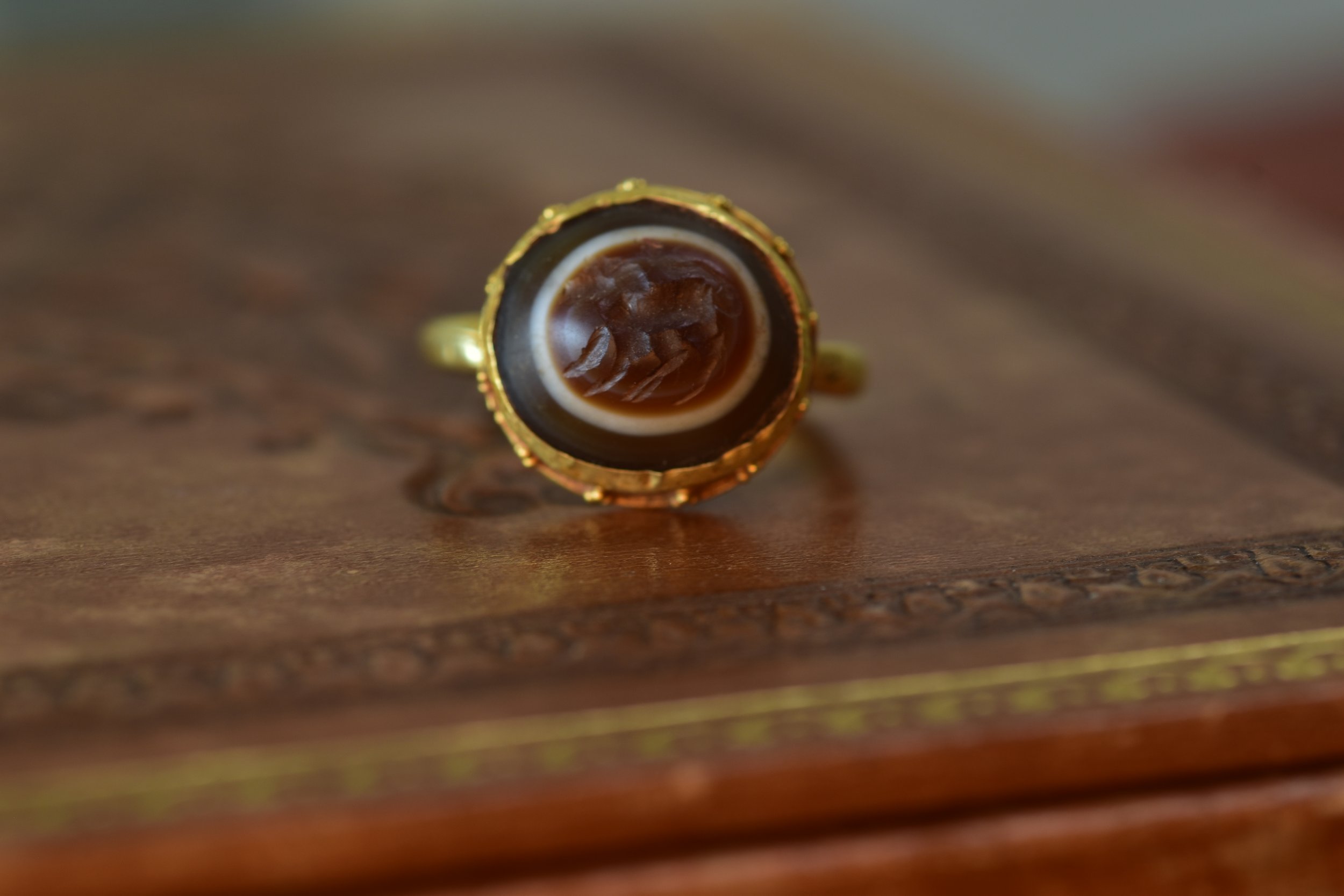 Image 1 of 7
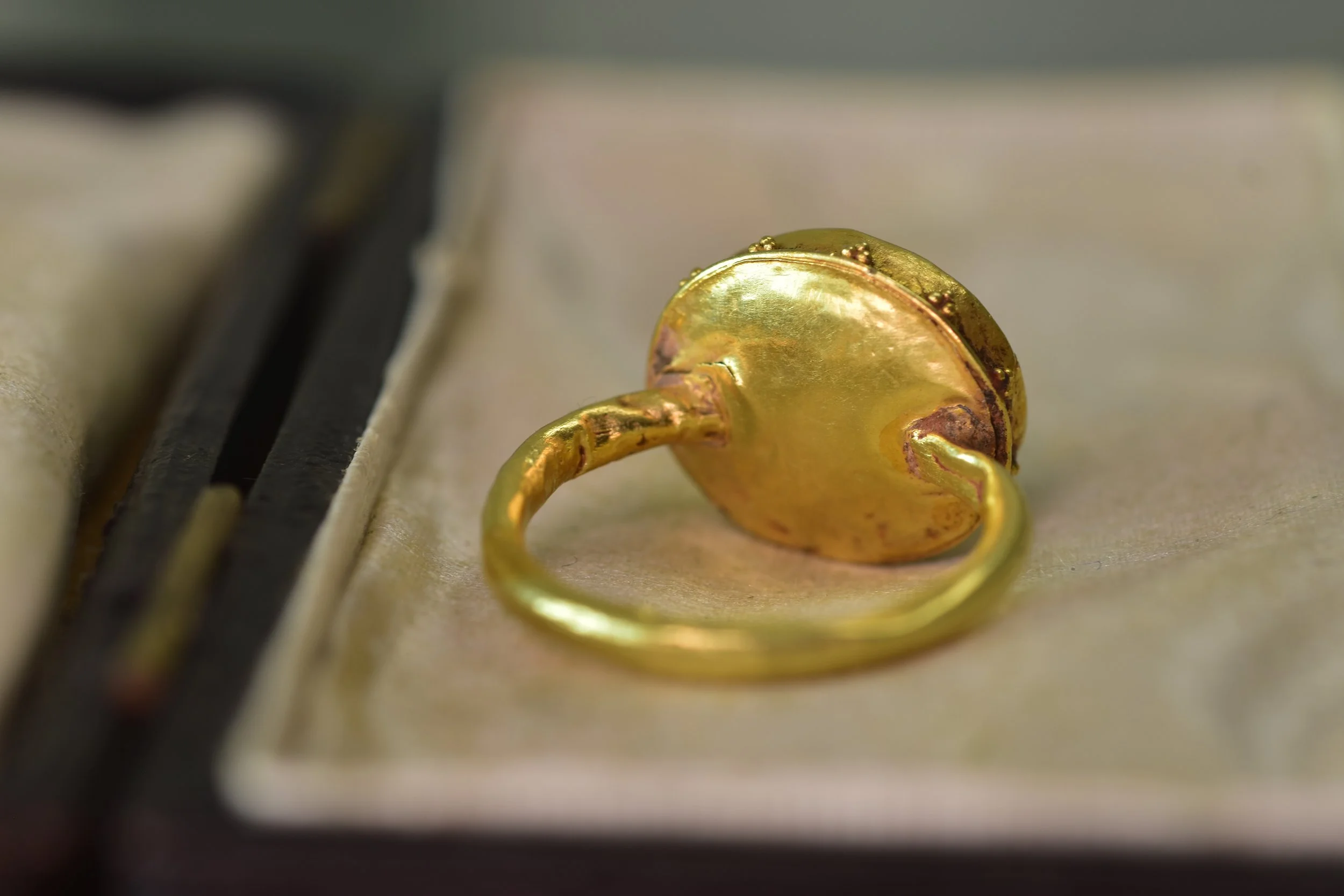 Image 2 of 7
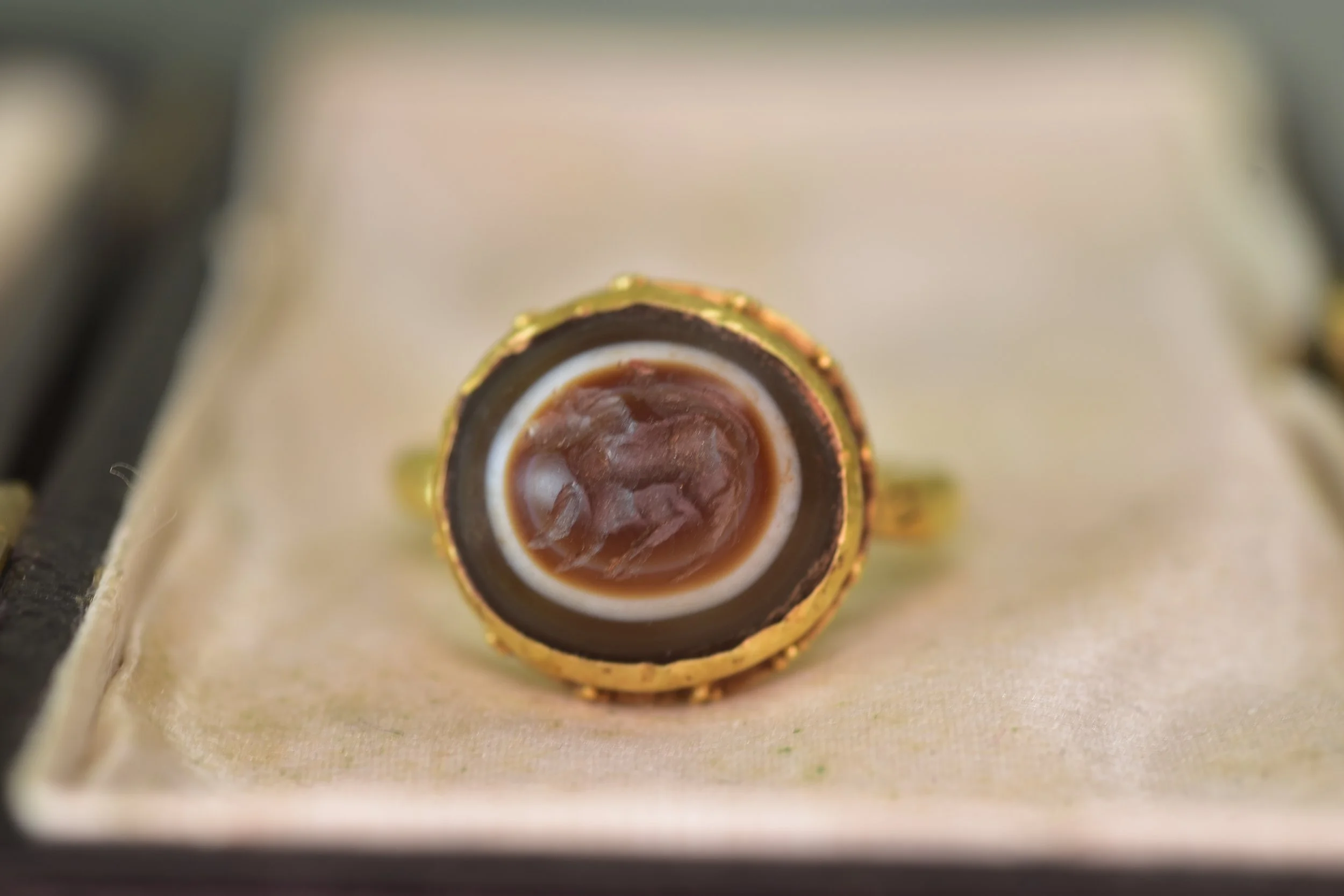 Image 3 of 7
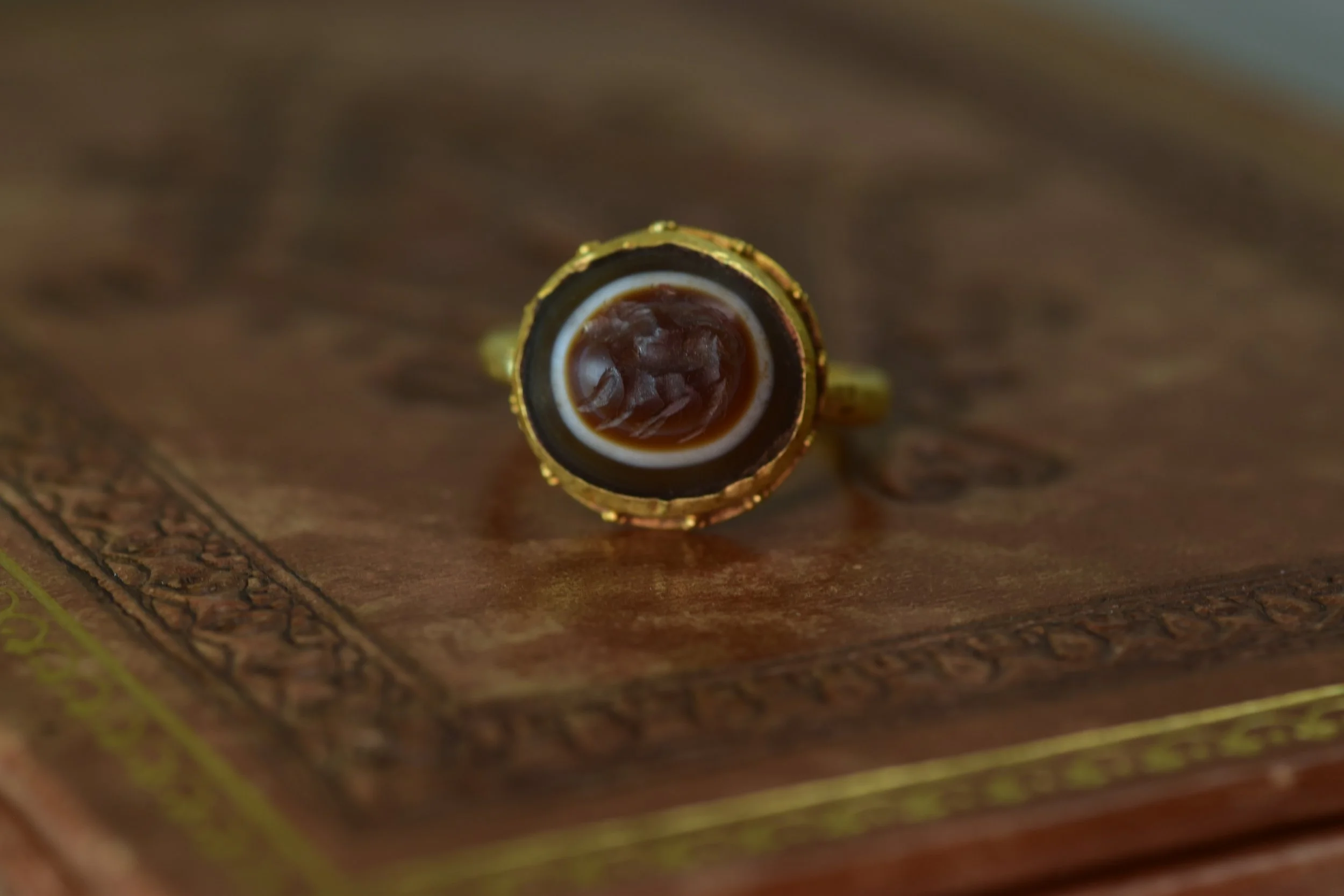 Image 4 of 7
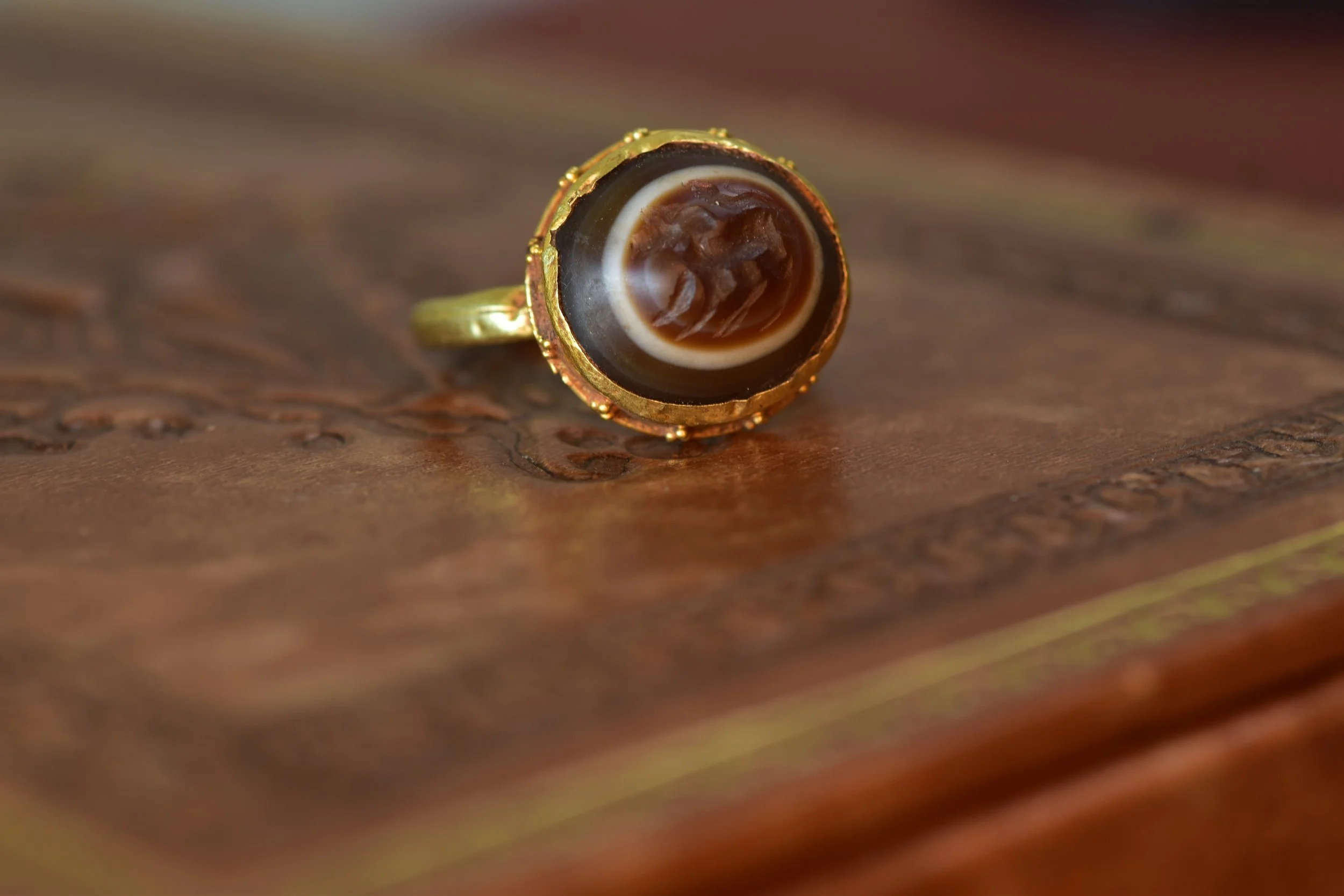 Image 5 of 7
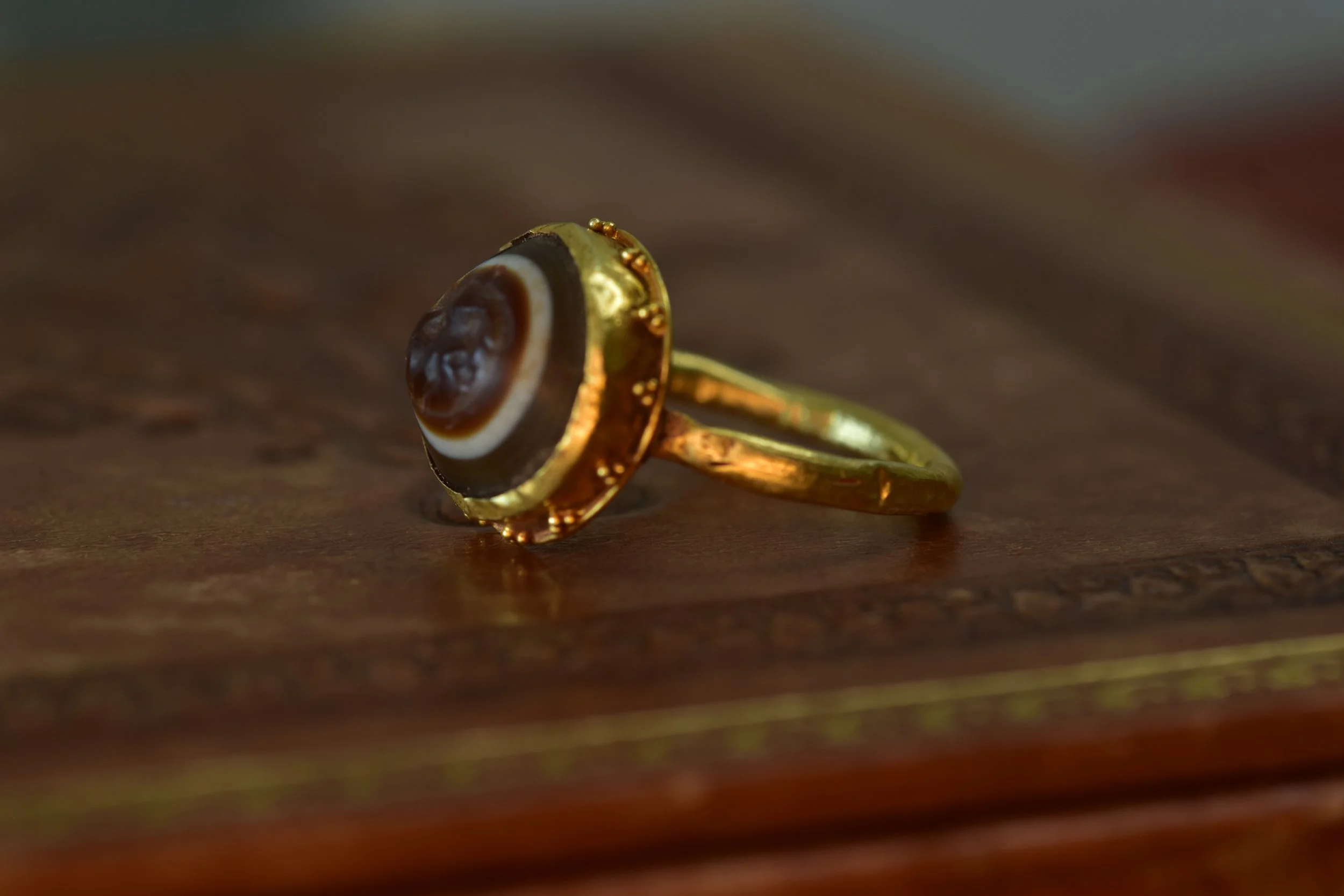 Image 6 of 7
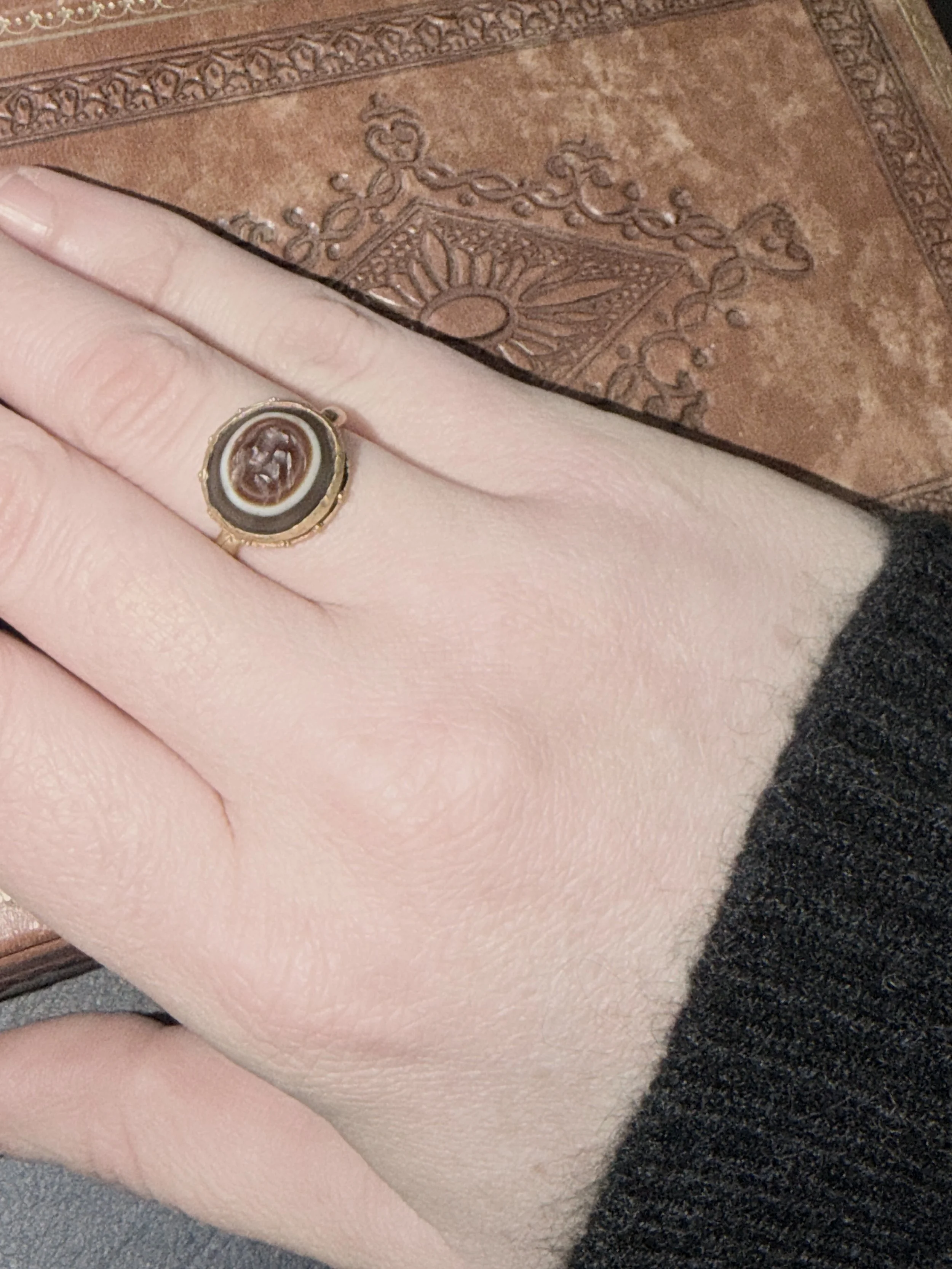 Image 7 of 7